
If you’ve ever walked into our shop here at Kona Impact or browsed our website, you know we’re passionate about helping Big Island businesses look their absolute best. Whether it’s a coffee farm up in Holualoa needing branded caps or a new restaurant in downtown Kailua-Kona looking for professional polos, embroidery is often the "gold standard" for local branding. It’s durable, it looks high-end, and it handles the salt air and sunshine of Hawaii better than almost anything else.
However, when we provide a quote for a first-time embroidery project, one of the most common questions we get is: "What is this setup fee for?"
It’s a fair question! In a world where we can print a photo from our phones in seconds, it can seem counterintuitive that a physical logo requires an "upfront cost" before the machines ever start humming. But embroidery is a unique beast. It isn’t just printing ink onto a surface; it’s a complex mechanical process that blends technology with old-school craftsmanship.
Today, we want to take you behind the scenes of our graphic design and production process to explain the "Art of Digitizing" and why that one-time setup fee is the best investment you can make for your brand’s physical identity.
It’s Not a Filter: The Myth of "Save As Embroidery"
The biggest misconception about embroidery is that we simply "open" your logo file (like a JPG or a PNG) and click a button that says "Convert to Stitches." If only it were that easy!
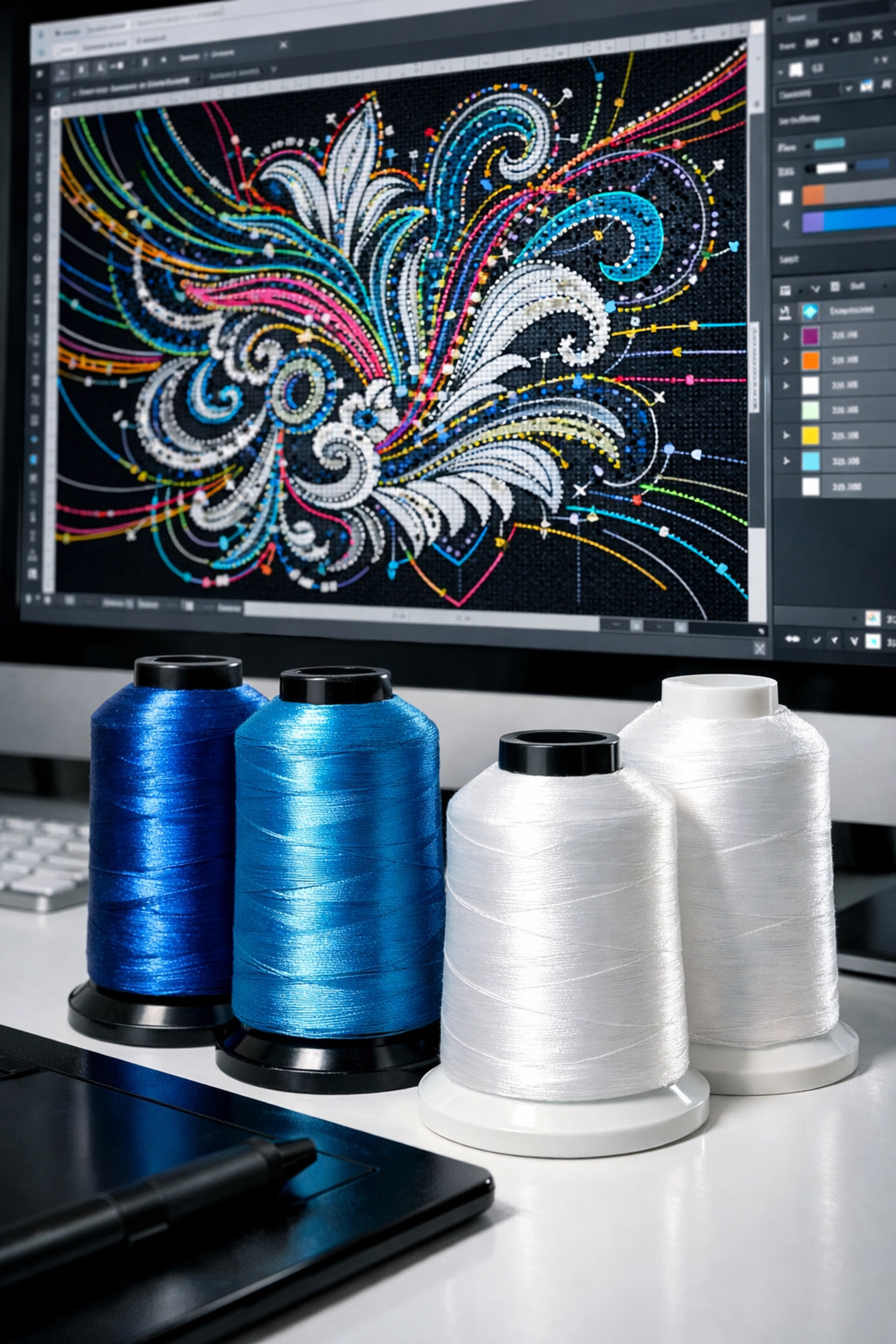
In reality, an embroidery machine is more like a very high-tech robot that needs a specific set of instructions to move a needle in three dimensions. Your computer screen shows pixels (tiny squares of color) or vectors (mathematical lines). An embroidery machine doesn't understand pixels. It only understands "X-Y" coordinates, stitch types, density, and "trim" commands.
The process of creating these instructions is called digitizing. It is the bridge between your digital art and the physical thread.
Step 1: Artwork Review and Vectorization
The process begins long before a needle touches fabric. When you bring us a logo, our first job is to see if it’s "embroidery-ready." Some logos look great on a business card but are impossible to sew. Tiny text, intricate gradients, or super-fine lines often need to be slightly adjusted so they don't turn into a "thread nest" on a shirt.
If your file is a low-resolution image, our team often has to perform a process called vectorization. We recreate the logo using clean, mathematical lines that allow us to scale the design without losing quality. This ensures that the foundation of your embroidery is as crisp as possible. We take great pride in our Hawaii business smarts approach, ensuring that we aren't just "taking an order," but actually looking out for the long-term quality of your brand.
Step 2: Manual Stitch Pathing (The Real "Art")
This is where the magic happens, and where the labor cost truly resides. A skilled digitizer at Kona Impact doesn't use an automated "auto-stitch" filter. Auto-stitching usually results in poor-quality designs that pucker, have gaps, or even break the embroidery machine's needles.
Instead, we manually "draw" the path of the needle. We decide:
- Where the design starts and ends: To minimize "jumps" (thread that has to be trimmed between sections).
- The Stitch Type: Should this area be a "Satin" stitch (long, smooth stitches) or a "Fill" stitch (rows of stitches for larger areas)?
- The Angle of the Stitches: By changing the direction the thread lies, we can create depth and catch the light differently, making your logo "pop."
- Underlay: This is a "hidden" layer of stitches that acts like a foundation for a house. It attaches the fabric to the stabilizer and prevents the top stitches from sinking into the fabric.
Every single element of your logo is hand-coded with these parameters. It’s a time-consuming process that requires years of experience to master.
Step 3: Adjusting for "Push and Pull" (Hats vs. Shirts)
Here is a detail most people don’t realize: fabric is alive. It moves, stretches, and reacts when a needle hits it 800 times a minute.
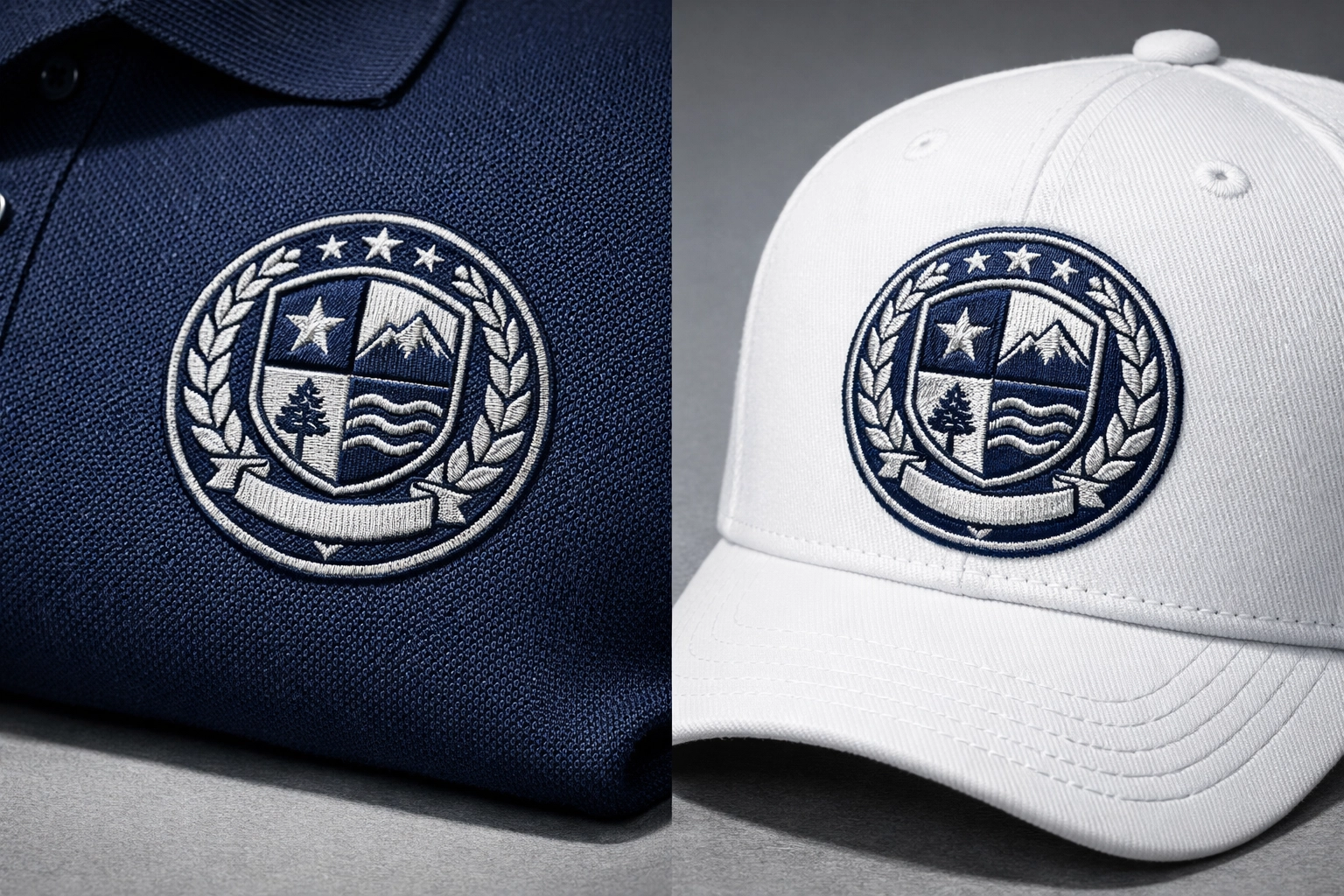
When we digitize a file for a soft cotton t-shirt, the fabric "pulls" inward as the stitches are applied. If we used that same file for a structured, stiff trucker hat, the design wouldn't line up correctly. Similarly, a design for a delicate silk blouse needs a very different "stitch density" than a design for a rugged canvas gear bag.
Part of the setup fee covers the expertise of adjusting for these fabrics. We compensate for "push and pull" by slightly over-extending certain parts of the digital file so that when the fabric inevitably moves during the sewing process, the final result looks perfectly aligned.
Step 4: The Testing and Sew-Out
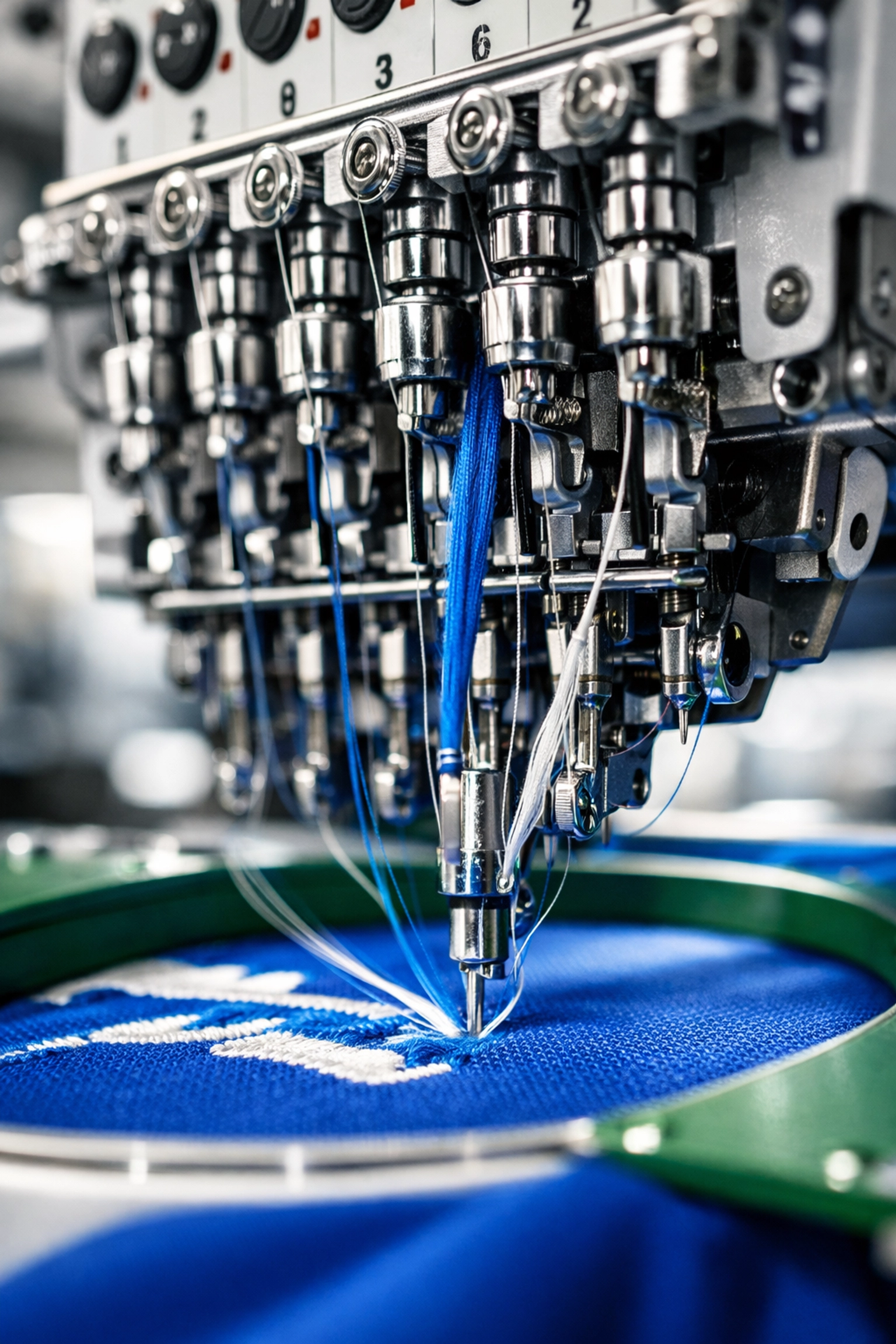
At Kona Impact, we don't just "hope" it looks good. Once the file is digitized, we perform a "test sew-out" on a piece of scrap material that matches your actual garment.
We watch the machine closely. Does the thread tension look right? Is the small text legible? Is the registration (how pieces line up) perfect? If it’s not 100% up to our standards, we go back into the software, tweak the code, and run the test again. We do this until it’s perfect so that your actual garments are never used as "guinea pigs."
Why the Upfront Cost is Worth It
When you pay a digitizing or setup fee, you aren't just paying for a computer file. You are paying for:
- Skilled Labor: The time of a professional designer who understands the physics of thread.
- Specialized Software: Professional embroidery software costs thousands of dollars and requires constant updates.
- Peace of Mind: You know that your logo won't pucker, unravel, or look "cheap" once it’s on your team's uniforms.
The best part? At Kona Impact, this is typically a one-time fee. Once we have your logo digitized for a specific size (say, a left-chest logo), we keep that file securely in our local archives. Next year, when you need more shirts or want to try a new color of polo, you don’t pay that setup fee again. You only pay for the embroidery itself. It’s a long-term investment in your brand’s business essentials.
The Kona Impact Advantage: Local Expertise, Quick Turnaround
We know you have options when it comes to branding. You could send your files to a massive mainland website, but there’s a risk there. If the digitizing is done by someone who doesn't understand the specific needs of your project: or if there's a mistake: you’re stuck dealing with customer service in a different time zone and shipping garments back and forth across the Pacific.
By working with us here in Kailua-Kona, you’re getting:
- In-House Quality Control: We are the ones running the machines. We see the stitches happening in real-time.
- Community Connection: We take pride in seeing our work on the streets of our town. Whether it's a project we just finished in our completed projects gallery or a local non-profit event, we want you to look great because you’re our neighbors.
- Fast Turnaround: No waiting weeks for a mainland shipment. We handle the digitizing and production right here on the Big Island.
Final Thoughts
Branding is about more than just a name; it’s about the impression you leave. High-quality embroidery tells your customers that you care about the details, that you’re established, and that you’re here to stay.
While the setup fee might feel like an "extra" at first, it is truly the "art" behind the scenes that ensures your brand is represented with the respect it deserves. We invite you to stop by our shop or visit our main page to learn more about how we can help take your logo from a digital screen to a beautiful, stitched reality.
Mahalo for supporting local, and we look forward to help you with your next buy local Kona project!