
Here's something we hear almost every week at our Kona shop: "I need a sign, but I have no idea what material to use." And honestly? That's a great question to ask before you spend money on a sign that might not last six months in Big Island weather.
The truth is, choosing the right sign material on the Big Island isn't the same as choosing one in Seattle or Denver. We're dealing with intense UV rays, salt air that corrodes just about everything, trade winds that test every mounting system, and volcanic soil that makes installation… interesting. The material you pick can mean the difference between a sign that looks great for years and one that fades, warps, or falls apart by summer.
Let's break down the three most common sign materials we work with at Kona Impact: PVC, Coroplast, and aluminum. By the end of this, you'll know exactly which one makes sense for your business.
PVC: The Big Island Favorite
If you've driven around Kona lately, you've probably seen more PVC signs than you realize. There's a good reason PVC has become our most recommended material for permanent outdoor signs on the Big Island.
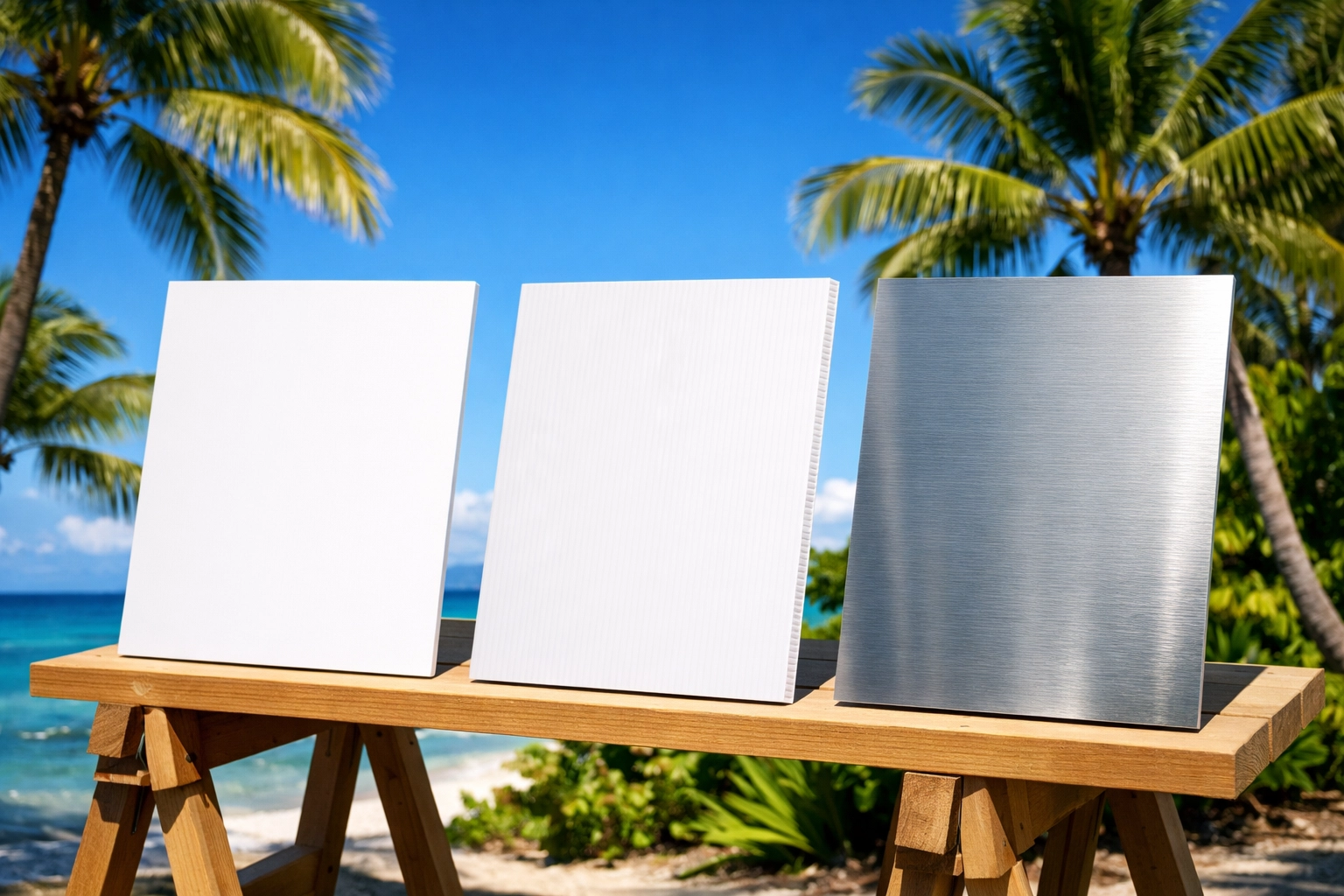
PVC is a rigid plastic that holds up remarkably well in our challenging environment. Unlike some materials that warp under intense sun exposure, PVC maintains its shape even when temperatures hit 90+ degrees. The UV resistance is excellent, which matters when your sign sits in direct Hawaiian sunshine eight hours a day, every day.
What we really appreciate about PVC is its versatility. It can be painted any color, accepts vinyl graphics beautifully, and can be routed or cut into virtually any shape. Need dimensional letters for your storefront? PVC works great. Want a hanging sign with custom cutouts? PVC handles it.
Best uses for PVC:
- Permanent storefront signs
- Directional signage
- Real estate signs that need to last
- Property identification signs
- Professional office signage
The cost is reasonable too, especially for larger signs where aluminum would get expensive quickly. A 4' x 8' PVC sign costs significantly less than the same size in aluminum, which matters when you're outfitting a new business location or upgrading multiple signs.
One thing to note: PVC does expand and contract slightly with temperature changes, so we account for that in our mounting systems. After years of installing signs across the Big Island, we know exactly how to make PVC installations last.
Coroplast: The Temporary Champion
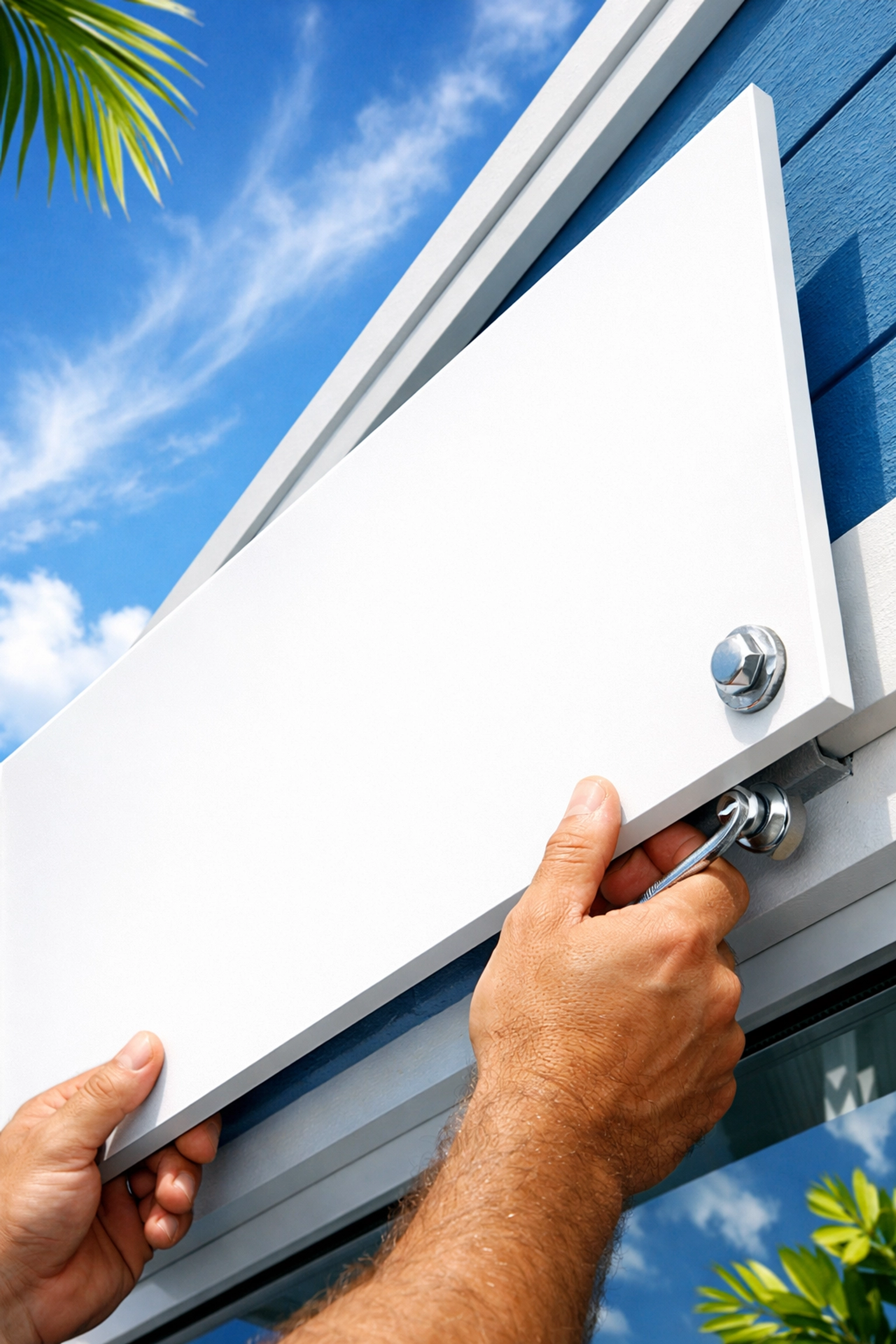
Coroplast looks like corrugated cardboard, but it's actually corrugated plastic. If you've seen yard signs for real estate or political campaigns, you've seen Coroplast in action.
This material shines when you need something temporary, affordable, and weatherproof. It's lightweight, which makes it easy to move around and install. Standard sizes like 18" x 12" or 24" x 18" are readily available, and we can custom-cut it to whatever dimensions you need.
Best uses for Coroplast:
- Real estate yard signs
- Event signage
- Construction site signs
- Temporary directional signs
- Weekend sale announcements
- Political campaign signs
The trade-off? Durability. Coroplast typically lasts 6-12 months in outdoor Big Island conditions before the sun starts breaking it down. The material becomes brittle, colors fade, and eventually it warps. But for short-term applications, that's perfectly fine. You don't need a five-year sign for a weekend event.
We keep Coroplast in stock specifically for those "I need signs by Friday" moments. Because it's lightweight and easy to work with, we can often turn around Coroplast signs same-day or next-day. That quick turnaround has saved more than one client when they forgot about an event or suddenly got a property listing.
Aluminum: When You Need Permanent
Aluminum is the traditional sign material, and it still has its place, especially for high-end applications or situations where you need maximum durability.
Metal signs have a premium look that PVC and Coroplast simply can't match. The rigidity is unmatched: aluminum doesn't flex or bend in wind. For dimensional letters or channel letter signs, aluminum (or other metals) are often the only option.
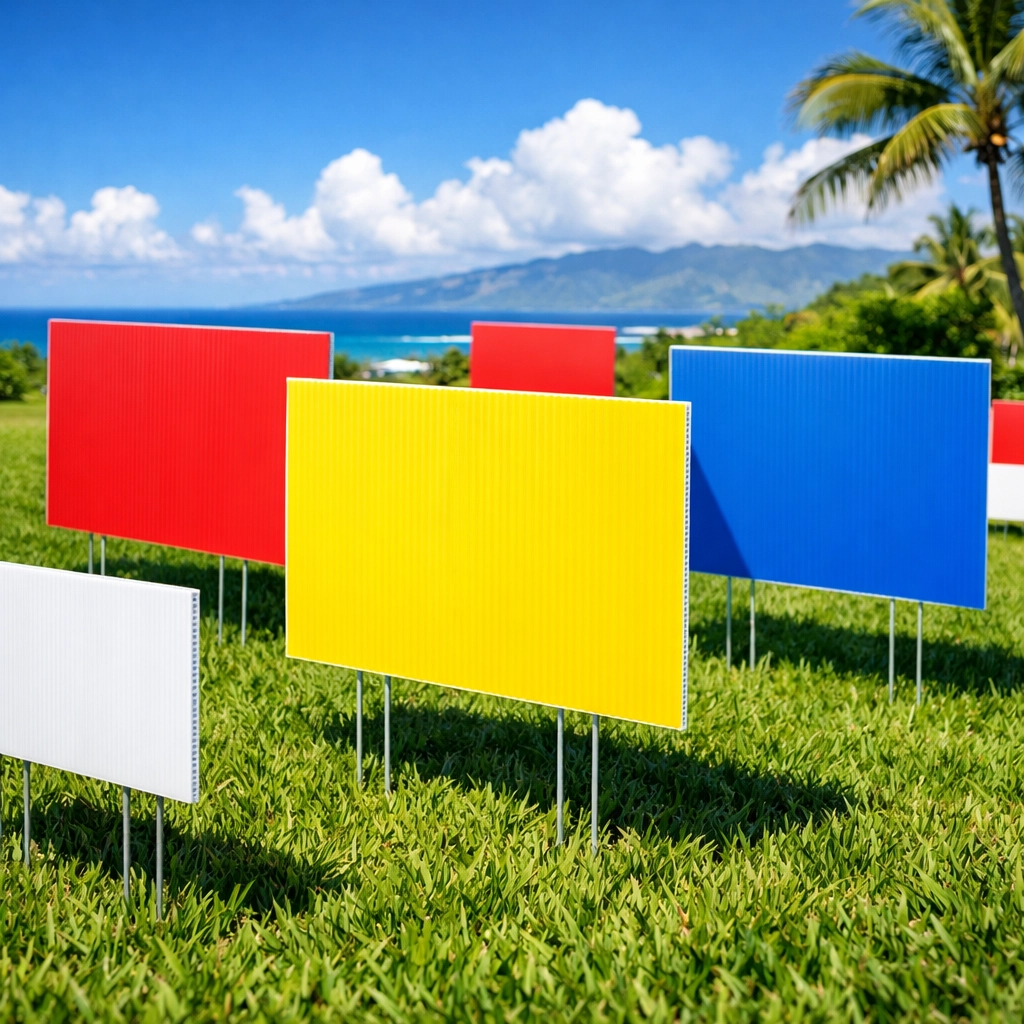
Aluminum handles Hawaii's weather well, though the salt air can eventually cause some corrosion if the finish isn't maintained. We typically recommend powder-coated or specially treated aluminum for outdoor Big Island applications.
Best uses for aluminum:
- High-end storefront signs
- Dimensional lettering
- Channel letter signs
- Monument signs
- Signs requiring maximum rigidity
- Historic building signs (where traditional materials matter)
The main drawback? Cost. Aluminum signs run significantly more expensive than PVC, especially as size increases. A large parking lot sign in aluminum might cost 2-3 times what the same sign costs in PVC. For some businesses, that premium is worth it. For others, PVC delivers 90% of the durability at a fraction of the price.
What Makes the Big Island Different
You might be wondering why we're making such a big deal about Hawaii-specific considerations. Can't you just use the same materials that work on the mainland?
Not really. The Big Island throws some unique challenges at outdoor signage:
The Sun: We're closer to the equator, which means more intense UV exposure. Materials that last five years in Portland might last three years here. UV degradation happens faster, which is why UV-resistant materials matter so much.
Salt Air: Even if you're a few miles inland, salt particles travel on the trade winds. This accelerates corrosion on metals and can break down adhesives faster than in dry climates.
Trade Winds: Those beautiful breezes that keep us comfortable also put constant stress on signs and mounting systems. We've seen mainland-installed signs literally blow apart within months because the mounting wasn't designed for consistent 15-20 mph winds.
Lava Rock: Here's something most people don't think about: installing posts in lava rock is expensive and sometimes impossible. The volcanic substrate near the surface makes traditional post-hole installations challenging. This often influences material choice because lighter materials like PVC can sometimes work with alternative mounting systems.
We've installed hundreds of signs across the Big Island, from Hilo to Kona to Waimea, and we've learned what works where. Coastal businesses need different solutions than upcountry locations. Areas with afternoon sun exposure need different considerations than shaded spots.
How to Choose: A Quick Decision Guide
Still not sure which material fits your needs? Here's how we usually help clients decide:
Choose PVC if:
- You need a permanent outdoor sign
- You're working with a moderate budget
- You want custom shapes or colors
- The sign will face direct sun exposure
- You need something that balances cost and durability
Choose Coroplast if:
- The sign is temporary (under 1 year)
- You need quick turnaround
- Budget is tight
- You might need to move or replace the sign
- You're promoting an event or short-term campaign
Choose Aluminum if:
- You want maximum durability
- You're creating dimensional letters
- The sign represents a high-end brand
- You need absolute rigidity
- Budget allows for premium materials
The Kona Impact Advantage
One thing we're proud of at Kona Impact is our turnaround time. We keep all three materials in stock because we know Big Island businesses can't always wait weeks for a sign. Need a quick Coroplast sign for this weekend's event? We can usually handle it. Want a custom PVC storefront sign? We'll work with your timeline.
We also understand the local installation challenges. That lava rock issue? We've dealt with it dozens of times. The salt air considerations for your beachfront business? We know exactly which mounting hardware and sealants work best.
Every sign we create gets made with Big Island conditions in mind. We're not just copying mainland solutions: we're applying years of local experience to make sure your sign actually lasts in our unique environment.
Making Your Decision
At the end of the day, the right sign material depends on your specific situation: how long you need it, where it's going, what it represents, and what you want to invest.
We're always happy to talk through your options. Bring us your ideas, your location, your timeline, and your budget. We'll help you figure out whether PVC, Coroplast, aluminum: or maybe something else entirely: makes the most sense.
Because the goal isn't just to sell you a sign. It's to create something that looks great, lasts as long as you need it, and represents your business well in the Big Island community. That's what we've been doing for years, and we're pretty good at it by now.
Ready to talk about your sign project? Stop by our Kona shop or give us a call. Let's figure out exactly what material will work best for your Big Island business.