
We've seen it happen too many times. A business owner invests in beautiful new signage, and six months later, it looks like it's been through a hurricane. The colors are faded, the edges are peeling, and there's rust creeping in from the corners.
Here's the thing about running a business in Kona: our paradise comes with a price tag for signage. The same salt air, intense sunshine, and tropical humidity that make this place special also destroy cheap signs faster than you'd believe. After years of helping local businesses with their custom signs in Kona, we've identified the seven biggest material mistakes we see, and more importantly, how to avoid them.
Mistake #1: Picking the Wrong Metal
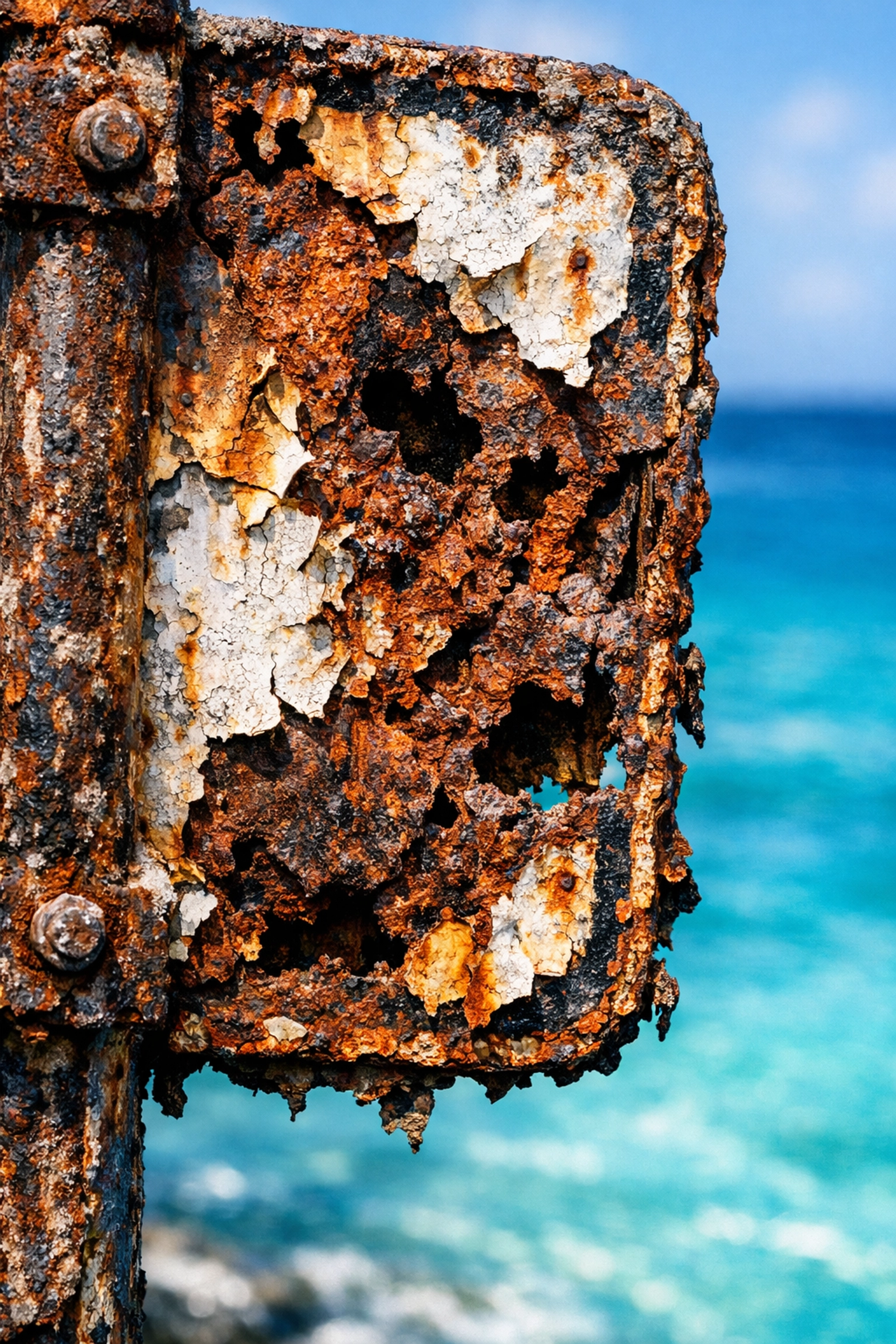
Let's start with the most expensive mistake. We've had business owners come to us after ordering cheap steel signs online, only to find rust appearing within weeks. Not months. Weeks.
The salt air here isn't like coastal environments on the mainland. It's more aggressive, and it works faster. Low-grade aluminum and untreated steel don't stand a chance. That bargain you got on a mainland sign supplier's website? It'll cost you double when you need to replace it in a year.
We recommend marine-grade aluminum or properly treated metals for any outdoor installation. Yes, it costs more upfront. But when your competitor down the street is replacing their rusted sign for the third time, yours will still look great.
Mistake #2: Ignoring UV Exposure
Kona's sunshine is incredible. It's also brutal on signage.
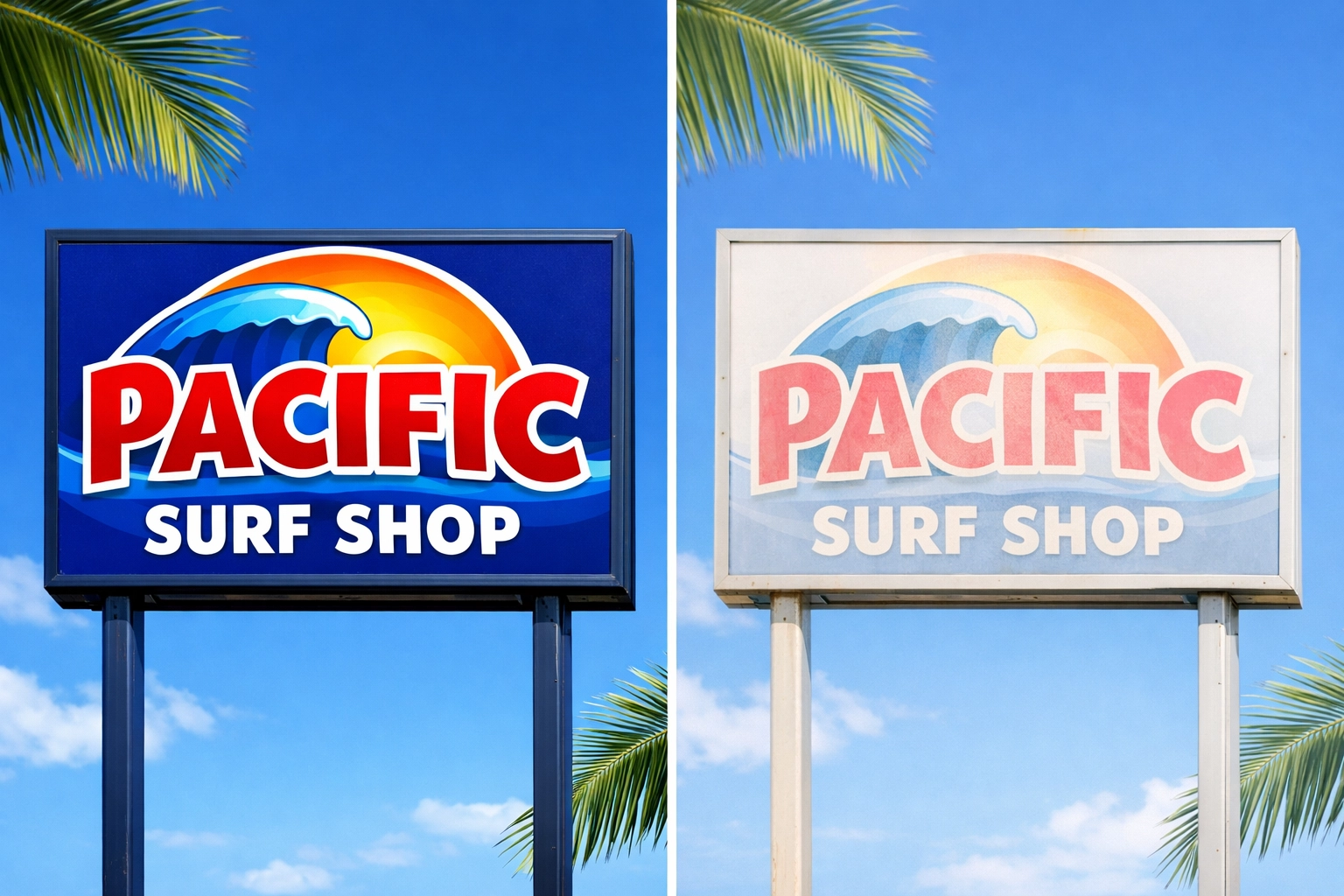
The UV index here regularly hits "extreme" levels, and cheap inks fade so fast you'll think they're evaporating. We've seen signs lose 40% of their color saturation in six months because someone used bargain vinyl or water-based inks without proper protection.
At our shop, we use eco-solvent printers and UV-resistant laminates specifically because we know what the Big Island sun does to unprotected materials. The difference isn't subtle: it's the difference between a sign that looks professional for years and one that looks washed out by summer's end.
If you're investing in building signs in Kona, ask your sign shop what kind of UV protection they're using. If they don't have a clear answer, keep looking.
Mistake #3: Using "Mainland" Plastics
Not all plastics are created equal, and what works in Denver won't necessarily work in Kona.
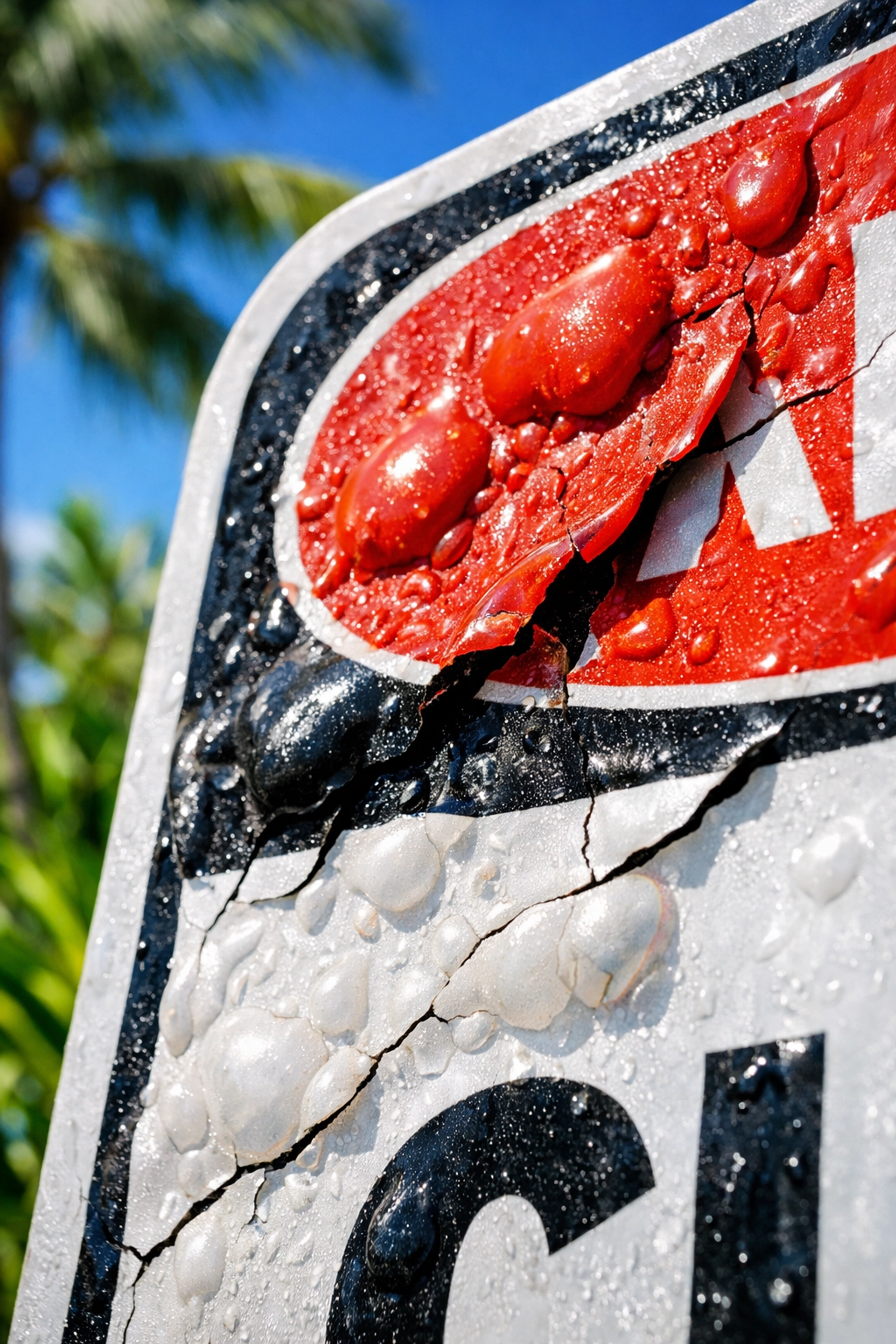
We've seen thin acrylic and PVC signs warp in the heat, creating wavy surfaces that look unprofessional. Some plastics become brittle in our climate and crack along the edges. Others expand and contract so much with temperature changes that mounting hardware fails.
The problem is that many mainland suppliers don't understand tropical environments. They're designing for four seasons, not endless summer with high humidity. When we source materials for our projects, we specifically look for plastics that can handle constant heat and moisture without degrading.
Mistake #4: Not Factoring in the Wind
If you've ever tried to hang banner printing in Kona during trade wind season, you know what we're talking about. The wind here isn't a gentle breeze: it can be relentless.
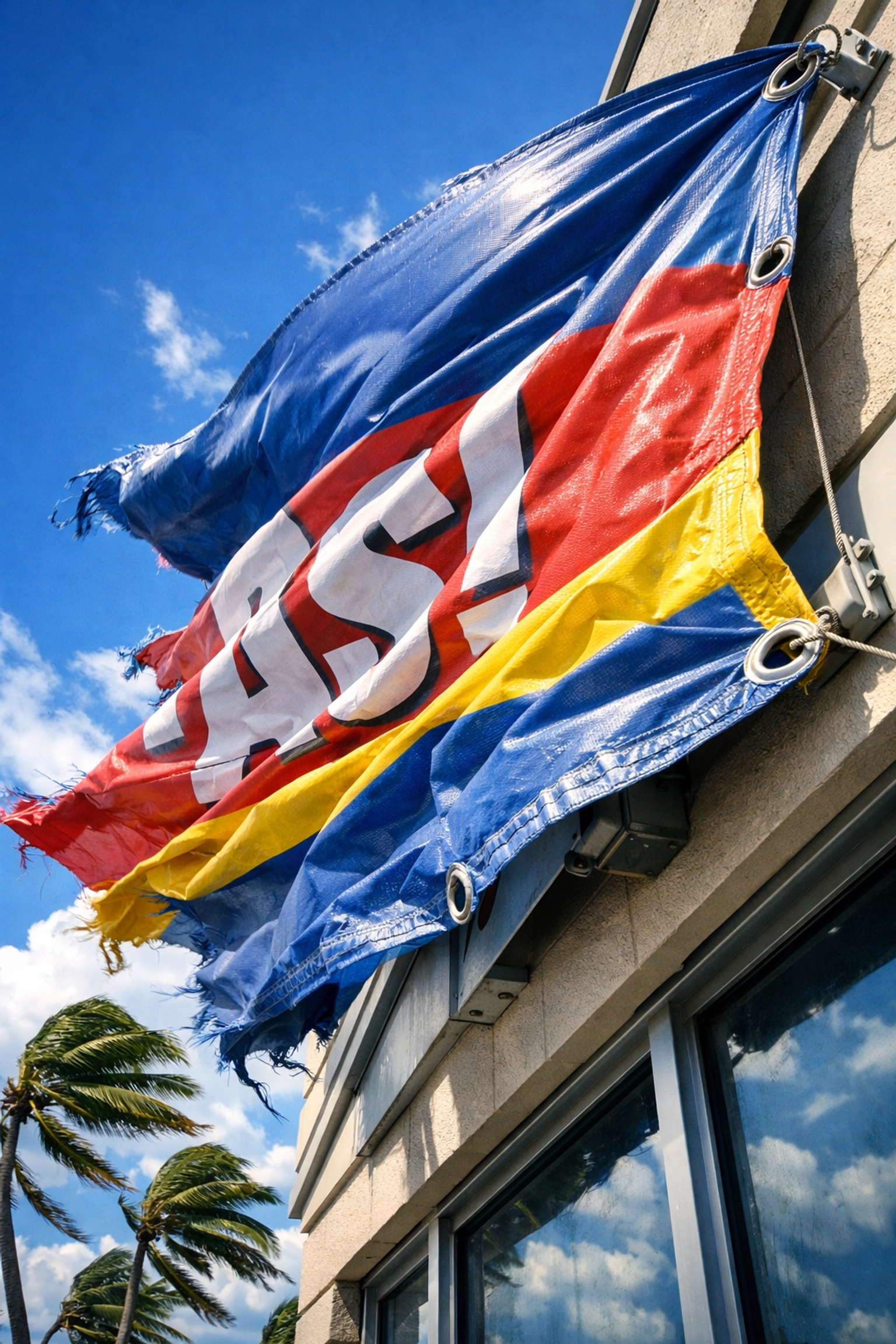
We regularly see banners torn to shreds because someone used the wrong material weight or didn't think about grommet placement. Here's what works: heavier-weight vinyl, grommets placed closer together than you'd use on the mainland, and wind slits for larger banners.
Wind slits are those small cuts in the banner material that let air pass through instead of turning your banner into a sail. They're not pretty, but they're a lot better than watching your investment flap itself to death in the first month.
For permanent installations, we always calculate wind load and use appropriate mounting systems. It's not exciting stuff, but it's the difference between signage that lasts and signage that becomes a liability.
Mistake #5: Bad Adhesives
Humidity is the silent killer of adhesive vinyl and decals.
Cheap sticker material might work great in Arizona, but here in Kona, moisture gets underneath and causes peeling. We've seen beautiful window decals start lifting at the edges within weeks because the adhesive wasn't designed for high-humidity environments.
The solution is using marine-grade or tropical-rated adhesives. They're formulated to maintain their bond even in humid conditions. We've installed vehicle graphics with these adhesives that are still holding strong years later, while cheaper alternatives would have failed in months.
Mistake #6: Forgetting the "Salt Air" Factor
This deserves its own section because it's the most misunderstood issue.
Salt air isn't just about being near the ocean. Even if your business is a mile inland, salt particles are in the air, and they're corrosive. They get into every crack, every seam, every unprotected edge. They eat through finishes, corrode metals, and degrade materials in ways that pure sun or rain never would.
We've learned to think about salt exposure for every project. That means sealed edges, corrosion-resistant hardware, and protective coatings that create a barrier against salt. It means not using materials with exposed wood cores or untreated metal fasteners.
When we design vehicle graphics and signs for local businesses, salt resistance is always part of the conversation. It has to be.
Mistake #7: Going Too Small
Here's a mistake that has nothing to do with materials and everything to do with visibility.
People drive fast in Kona. They're not slowly cruising past your business, carefully reading every word on your sign. They're glancing over while navigating traffic, and if your sign is too small or your fonts are too delicate, they'll miss it completely.
We follow the five-second rule: if someone can't read and understand your sign in five seconds or less, it needs to be redesigned. That usually means larger lettering, bolder fonts, and simpler messaging than business owners initially want to use.
Your sign isn't a novel. It's a billboard that needs to work at 35 miles per hour in bright sunlight. Design accordingly.
The Kona Impact Difference
We don't just sell signs: we sell signs that last in this environment. Every material we use has been tested in Big Island conditions. We know which adhesives hold up, which metals resist corrosion, and which plastics won't warp in the heat.
Being local means we've seen the results of both good decisions and bad ones. We've watched signs age, tracked which materials perform, and learned from every installation. When we recommend a material or method, it's because we've seen it work here, not because it's what some mainland supplier told us to use.
If you're ready to invest in signage that won't let you down, let's talk. We can walk you through material options, show you samples of installations that have been up for years, and design something that'll make your business stand out: without falling apart.
Because in Kona, your sign isn't just marketing. It's an investment that needs to survive paradise. And that takes the right materials, the right installation, and a sign shop that actually understands what "salt air tested" really means.
Check out our portfolio of work to see signs that have stood the test of time, or stop by our shop to talk about your next project. We're here to help you avoid these expensive mistakes and create something that lasts.