
We’ve seen it happen more times than we can count. A business owner gets excited about their new sign, orders something that looks perfect online, and then… three months later, it’s faded, peeling, or just plain falling apart. Living and working here on the Big Island means dealing with conditions that would make a mainland sign installer break out in a cold sweat. Salt air, intense UV rays, humidity that never quits, our environment doesn’t mess around.
After years of creating custom signs in Kona, we’ve learned exactly what works (and what spectacularly doesn’t) when it comes to signage in Hawaii. Let’s walk through the seven most common mistakes we see local businesses make, and more importantly, how we help them avoid these costly pitfalls.
1. The Material Mismatch Disaster
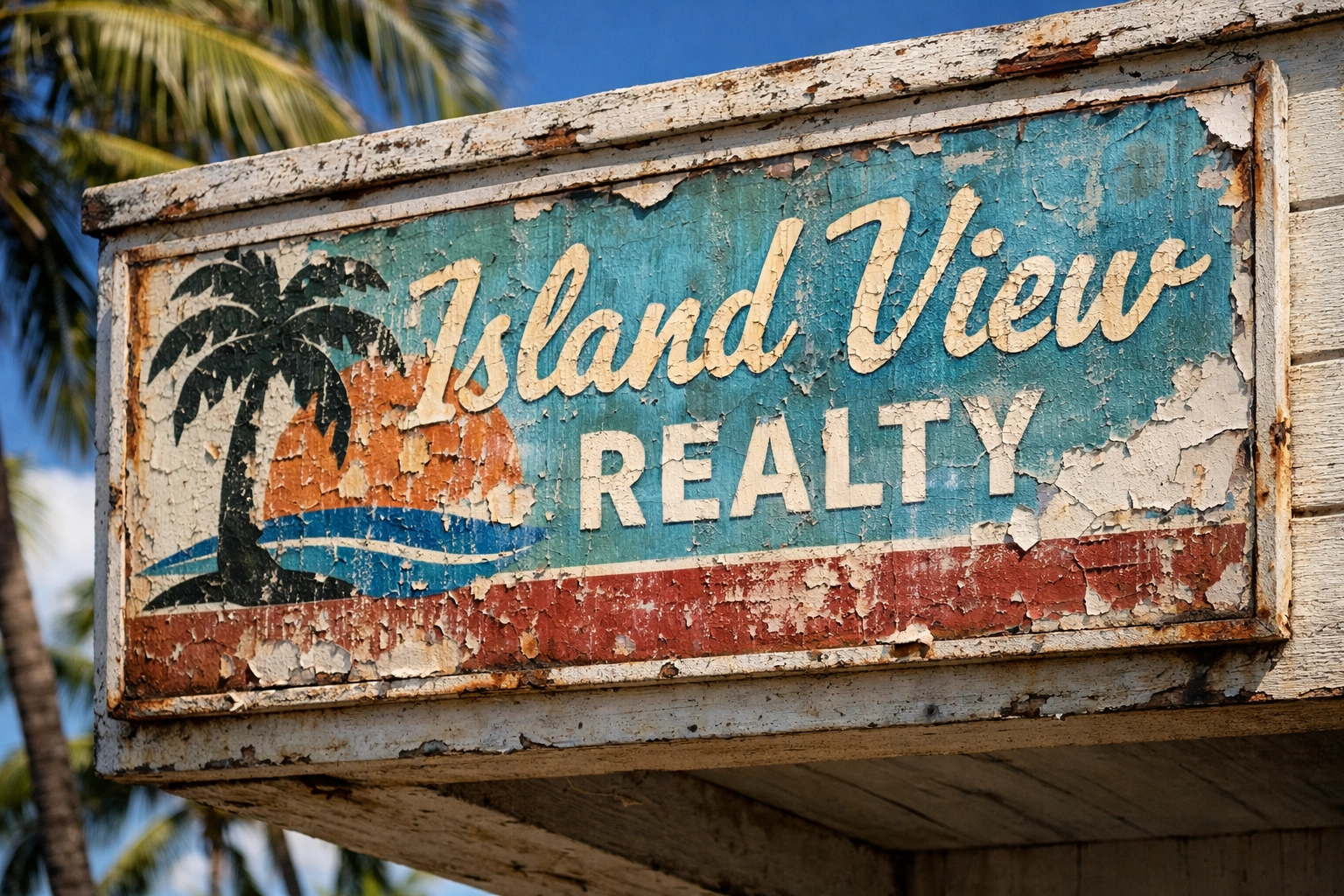
Here’s the thing about Hawaii: what works perfectly in Phoenix or Portland will absolutely fail here. We’ve watched business owners invest in beautiful signs made with materials that simply weren’t meant for our climate. The Big Island’s combination of salt air, volcanic fog (vog), and year-round UV exposure creates the perfect storm for sign deterioration.
That budget vinyl that looked great on day one? It’ll be cracked and faded within six months. Standard aluminum without proper coating? Expect corrosion faster than you’d think possible. We’ve seen acrylic signs that warped in the heat and printed materials where the ink literally faded away like a bad sunburn.
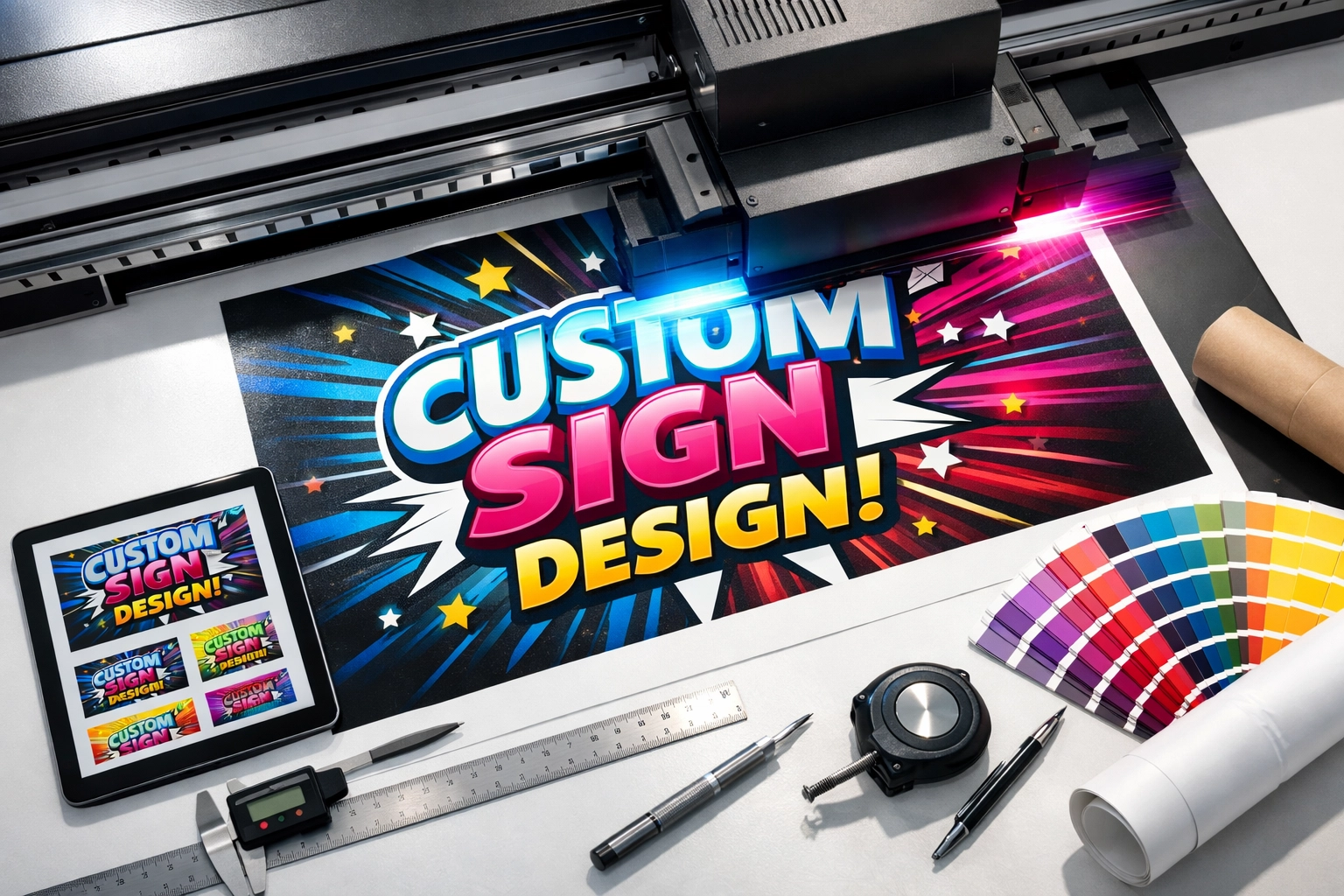
Our solution at Kona Impact is simple: we use only UV-resistant, marine-grade materials designed to withstand tropical conditions. Our high-end UV printer uses inks that won’t fade quickly even under our brutal sun, and we select substrates that can handle both the humidity and the salt air. It costs a bit more upfront, but our clients aren’t replacing their signs every year, and that’s the real savings.
2. “The Mainland Wait” Trap
We get it. Sometimes those online prices look tempting. But here’s what that “great deal” actually costs: shipping from the mainland takes weeks (sometimes months if there are supply chain hiccups), adds hundreds of dollars to your bill, and there’s always the risk of damage during transport. We’ve seen signs arrive bent, scratched, or completely shattered after their Pacific crossing.
Then there’s the biggest headache: if something goes wrong, you’re stuck dealing with a company thousands of miles away that doesn’t understand the urgency of getting your business signage up and running.
As a local sign shop in Kona, we offer something the mainland companies simply can’t: a 2-day turnaround on many custom signs. Need it faster? We’ve been known to pull off same-day miracles when businesses are in a bind. Our in-house CNC machine and UV printer mean we control the entire production process right here on the island. No waiting, no astronomical shipping fees, no crossed fingers hoping it arrives intact.
3. Design Overload: The “Novel on a Billboard” Syndrome
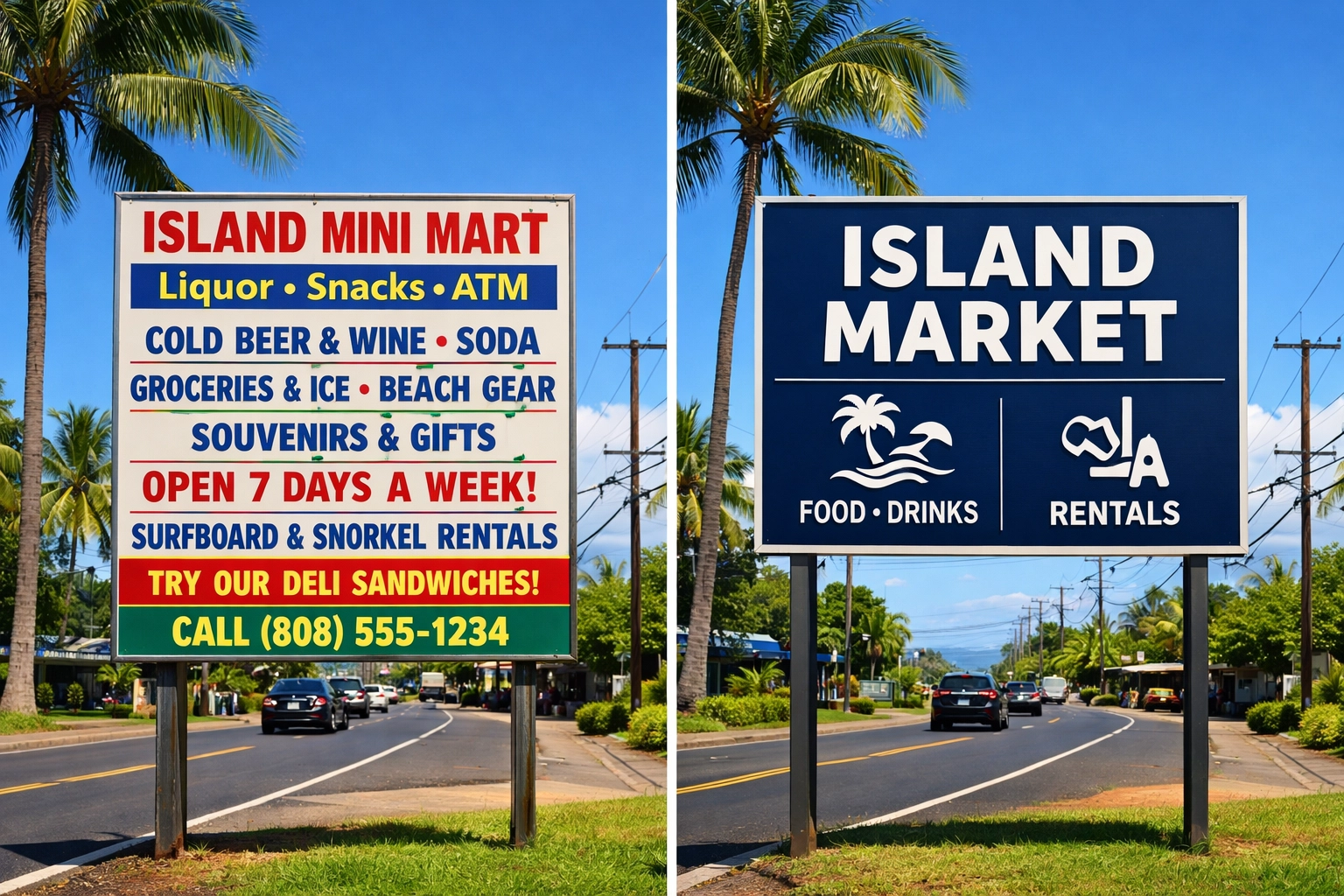
Here’s a scenario we encounter weekly: a business owner wants to include their full menu, business hours, phone number, website, social media handles, and detailed service description all on one exterior sign. The result? A cluttered mess that drivers can’t read, even if they’re stuck in Ali’i Drive traffic.
Your sign has about 3-5 seconds to make an impression on someone driving by. Maybe less if traffic’s moving. That’s barely enough time to process your business name and one key message. Loading up your sign with paragraph-sized text doesn’t make people more informed; it makes them drive right past.
We help businesses identify their core message. What’s the ONE thing you want potential customers to remember? Usually, it’s your business name, maybe your category (like “Coffee & Breakfast” or “Surf Shop”), and ideally a quick visual element. That’s it. Our team works with you to create signs that communicate clearly and quickly, with hierarchy and spacing that actually work at viewing distance.
4. The Visibility and Contrast Conundrum
Pale yellow text on a white background might look “beachy” and subtle, but it’s completely invisible under Kona’s bright sun. We see this constantly, color combinations that look great on a computer screen but disappear entirely in real-world lighting conditions.
The Big Island has some of the most intense sunlight in the country. Colors behave differently here than they do in cloudier climates. Pastels wash out. Low-contrast combinations become unreadable. And certain color pairings that work indoors become impossible to distinguish outdoors.
Before we finalize any design, we consider Hawaii’s lighting conditions. High contrast is your friend: dark on light or light on dark. We often recommend bold, saturated colors that hold up under direct sunlight. And we’ve learned which color combinations actually pop in bright tropical light versus which ones fade into the background. It’s part science, part experience, and it makes all the difference in whether your sign gets noticed or ignored.
5. Wrong Sign for the Wrong Job
Not all signs are created equal, and using the wrong type for your specific application is a recipe for disappointment. We’ve seen foam board signs mounted outside (they last maybe two heavy rain storms), paper posters in sunny windows (faded to nothing within weeks), and vinyl banners installed where rigid signs were needed (hello, flapping and tearing).
Every sign type has its ideal use case. Temporary event in a protected area? Sure, foam board works great. Permanent outdoor identification? You need something far more robust: typically aluminum or MDO (Medium Density Overlay) with UV-printed graphics and proper weatherproofing. Vehicle graphics? That requires specialized automotive-grade vinyl. A-frame sidewalk signs? They need weighted bases to handle our trade winds.
Our team assesses your specific needs: location, duration, viewing distance, weather exposure: and recommends the right materials and construction methods for that exact application. It’s not about upselling you to the most expensive option; it’s about ensuring your sign actually performs the job you need it to do.
6. Installation Fails That Guarantee Failure
Even the best sign will fail if it’s not installed properly, and installation in Hawaii requires some special considerations. We’ve inherited countless projects where someone tried to DIY their sign installation, and within months, edges are peeling, corners are lifting, or the whole thing is starting to detach.
The problem usually comes down to surface preparation. In our humid, salty environment, surfaces need to be immaculately clean and properly primed. Any contamination: salt residue, UV degradation, moisture, oils: will prevent proper adhesion. The intense heat also means that installation technique matters enormously. Apply vinyl when it’s too hot, and you’ll get bubbles and poor adhesion. Too cool (rare here, but it happens), and the adhesive won’t activate properly.
7. Brand Inconsistency Across Your Marketing
This one might seem less obvious, but it’s incredibly common: a business has one version of their logo on their website, a slightly different one on their vehicle, another variation on their storefront, and yet another on their business cards. Colors don’t quite match. Fonts are similar but not identical. The overall impression is… confused.
Brand consistency builds recognition and trust. When potential customers see the same visual identity across all your touchpoints, it reinforces your professionalism and makes your business more memorable. When everything looks a little different, it suggests disorganization and lack of attention to detail.
At Kona Impact, we offer comprehensive marketing services that ensure brand consistency across all your materials: from vehicle graphics to storefront signs to digital marketing. We maintain your brand files and make sure that whether we’re printing a banner, wrapping a truck, or creating a website, your logo, colors, and fonts are pixel-perfect and consistent. It’s a small detail that makes a massive difference in how professional and established your business appears.
The Kona Impact Difference
Look, we’re not going to tell you that custom signs are rocket science. But we will tell you that creating signage that actually lasts and performs in Hawaii’s unique environment requires specific knowledge, quality equipment, and local experience.
Our in-house capabilities: from CNC cutting to UV printing to laser engraving, mean we control quality at every step. Our 2-day turnaround keeps your projects moving forward. And our years of experience serving Big Island businesses mean we’ve already solved the problems you’re about to encounter.
Whether you need a simple yard sign or a complete storefront makeover, we’re here to make sure you avoid these seven common mistakes and end up with signage that works as hard as you do. Give us a call: we’re always happy to talk through your project and help you figure out exactly what you need.